How to Start Investing in Real Estate – Real Estate Investment Tips
For an experienced SF Bay Area real estate agent visit http://iLiveInTheBayArea.com
Like me on Facebook: http://fb.com/iLiveInTheBayArea
Thumbs up, favorite, share, subscribe and make a comment!
In the investment world, there's many different ways you can invest your money. One would be stocks -- You buy a small piece of a company, and if the company does well you're piece is worth more...maybe it even pays a dividend.
Then there are bonds -- you along with others pool your money together to loan out to companies and they pay you a fixed rate over the long term. Definitely considered more "stable" than stocks, but with a much smaller return as well due to its safety over stocks. Of course there are gold, commodities such as oil, mutual funds and many others, but today we're going to be talking about real estate.
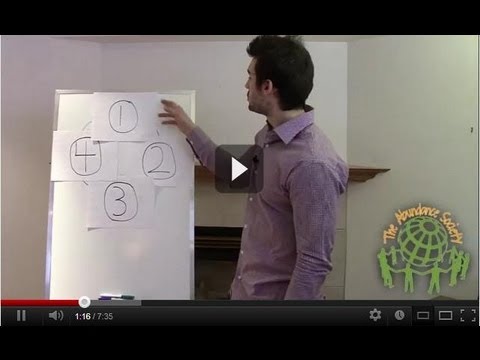
Real estate is viewed as a middle of the road type of investment vehicle to park your money. It does fairly well -- on average better than bonds -- and it's relatively safer than stocks. However, most new investors are unfamiliar with how to actually START investing in real estate. There are four factors or questions you need to ask yourself as an investor. These topics are in regards to capital -- or money -- goals, type and location.
The first and foremost thing needed to start investing in real estate is money. Practically every property type requires a buyer to put down between 25-40%. In fact, there are going to be times where you may not even be able to get financing. For instance, if you're looking into buying a $2M office complex that's fully leased and producing stable income, you will need a sizable 30-35% down payment.
If the same $2M property is an apartment, you may be able to get away with 20-30% down payment. BUT, if the building is empty, or only produces a very small income, then you are likely going to have to pay all cash. This is because the income that the property generates must pay for all the expenses, including the mortgage, and then some as discussed in my "commercial loan process" video.
The second question you must answer as an investor is, "What are my ultimate long term goals?" Of course, your likely answer is to make more money! But you need to be more detailed than that. Do you want to hold all your property forever and only base your decisions on rental income?
Do you plan on buying properties that are distressed, only to lease them up and flip them for a higher price as I've talked about in my "Value Add Properties" video? These are just a few of the decisions you really have to answer before you start buying.
The final factors you have to address are what property type you plan on investing in and what locations you're willing to go to. In regards to location, most novice investor prefer to stay local, since they know their areas. But your local market, wherever it may be, may not be as stable as one of the large markets such as the San Francisco Bay Area, Greater Los Angeles, New York and so forth.
Investing isn't something you should ever JUMP into. Regardless of if you're considering stocks, bonds or real estate, you should always educate yourself as much as possible to make an intelligent and informed decision. After all, we're talking about YOU'RE MONEY.
The problem is most people never take the time to do so...I mean with work, family,...life in general, it's completely understandable. The good thing is that there are people in each field who would gladly help out and answer any questions you may have. It's YOUR responsibility to seek it out...now that's good to know.
Contact Davide Pio Today | SF Bay Area Real Estate
http://iLiveInTheBayArea.com | 510-815-2000
For an experienced SF Bay Area real estate agent visit http://iLiveInTheBayArea.com
Like me on Facebook: http://fb.com/iLiveInTheBayArea
Thumbs up, favorite, share, subscribe and make a comment!
In the investment world, there’s many different ways you can invest your money. One would be stocks — You buy a small piece of a company, and if the company does well you’re piece is worth more…maybe it even pays a dividend.
Then there are bonds — you along with others pool your money together to loan out to companies and they pay you a fixed rate over the long term. Definitely considered more “stable” than stocks, but with a much smaller return as well due to its safety over stocks. Of course there are gold, commodities such as oil, mutual funds and many others, but today we’re going to be talking about real estate.
Real estate is viewed as a middle of the road type of investment vehicle to park your money. It does fairly well — on average better than bonds — and it’s relatively safer than stocks. However, most new investors are unfamiliar with how to actually START investing in real estate. There are four factors or questions you need to ask yourself as an investor. These topics are in regards to capital — or money — goals, type and location.
The first and foremost thing needed to start investing in real estate is money. Practically every property type requires a buyer to put down between 25-40%. In fact, there are going to be times where you may not even be able to get financing. For instance, if you’re looking into buying a $2M office complex that’s fully leased and producing stable income, you will need a sizable 30-35% down payment.
If the same $2M property is an apartment, you may be able to get away with 20-30% down payment. BUT, if the building is empty, or only produces a very small income, then you are likely going to have to pay all cash. This is because the income that the property generates must pay for all the expenses, including the mortgage, and then some as discussed in my “commercial loan process” video.
The second question you must answer as an investor is, “What are my ultimate long term goals?” Of course, your likely answer is to make more money! But you need to be more detailed than that. Do you want to hold all your property forever and only base your decisions on rental income?
Do you plan on buying properties that are distressed, only to lease them up and flip them for a higher price as I’ve talked about in my “Value Add Properties” video? These are just a few of the decisions you really have to answer before you start buying.
The final factors you have to address are what property type you plan on investing in and what locations you’re willing to go to. In regards to location, most novice investor prefer to stay local, since they know their areas. But your local market, wherever it may be, may not be as stable as one of the large markets such as the San Francisco Bay Area, Greater Los Angeles, New York and so forth.
Investing isn’t something you should ever JUMP into. Regardless of if you’re considering stocks, bonds or real estate, you should always educate yourself as much as possible to make an intelligent and informed decision. After all, we’re talking about YOU’RE MONEY.
The problem is most people never take the time to do so…I mean with work, family,…life in general, it’s completely understandable. The good thing is that there are people in each field who would gladly help out and answer any questions you may have. It’s YOUR responsibility to seek it out…now that’s good to know.
Contact Davide Pio Today | SF Bay Area Real Estate
http://iLiveInTheBayArea.com | 510-815-2000






)
Considering getting started in real estate investing, but you make it seem
like I can only achieve monthly income if I’m buying homes that are worth
huge amounts of money. A down payment of 20% being 300k prices the home at
like 1.5 million. I know that this is because of location and the SF Bay
Area is very expensive, but do you think the same principles could be
applied to the mid-west where homes are priced significantly less? A $1.5
million home in the SF Bay Area could be a 4 bedroom single family home,
where as in my location a similar home is priced at 150k. Are investments
still worth it if I’m not working with larger amounts of cash? Instead of
cash flowing 3k a month, it would be more like 300. Or should I first flip
for more start up cash and then invest in a larger market, like the SF Bay
Area, or other coastal areas?
Ok i would really appreciate if u can answer me if someone has got 200k to
invest can he/she really start making chunk of money in real estate i mean
would this amount of money would help start a business . Plz email me at
splitingstar@Gmail.com
davide, you have great videos and make excellent key points. I am very
interested in real estate investment and have been reading and listening a
lot lately. I was thinking for a first time investment to start small,
maybe a auction, foreclosure, or short sale for under 30k. What do you
think? What are questions I should ask? Things to look at? Would you just
flip it or try to repair and re sale. I just want to flip houses. Thanks
wittock2007@hotmail.com
Hi Joe. Glad to hear your interest in investing! As for the SF Bay Area,
$30k wont get you practically any type of product…I doubt there’s even
available properties in the Central Valley for that price. However, doesn’t
mean in your market $30k isn’t possible. Whatever you do, have a team
ready. Most areas the real estate agent who helps you gets paid by the
seller, and usually they’ll suggest inspectors of all types for you. Never
hurts to get referrals. I’ll email you a few other pointers.